(Peer-Reviewed) Polyurethane grouting materials with different compositions for the treatment of mud pumping in ballastless track subgrade beds: properties and application effect
Zhichao Huang 黄志超 ¹ ², Qian Su 苏谦 ¹ ², Junjie Huang 黄俊杰 ¹ ², Minqi Dong 董敏琪 ¹, Dong Li ³, Ting Liu ⁴
¹ School of Civil Engineering, Southwest Jiaotong University, Chengdu, 610031, China
中国 成都 西南交通大学土木工程学院
² Key Laboratory of High-Speed Railway Engineering of Ministry of Education, Southwest Jiaotong University, Chengdu, 610031, China
中国 成都 西南交通大学 高速铁路线路工程教育部重点实验室
³ China Railway Fourth Survey and Design Institute Group Co., Ltd., Wuhan, 430000, China
中国 武汉 中铁第四勘察设计院集团有限公司
⁴ China Railway Construction Kunlun Investment Group Co., Ltd., Chengdu, 610040, China
中国 成都 中国铁建昆仑投资集团有限公司
Abstract
Mud pumping in subgrade beds under ballastless tracks will deteriorate the dynamic performance of infrastructure under railway lines, reduce the smoothness of the railway lines, and seriously affect the comfort and safety of the trains. Due to their good mechanical properties, two-component polyurethane materials can be used for grouting to treat the fouling problems caused by ballastless track mud pumping.
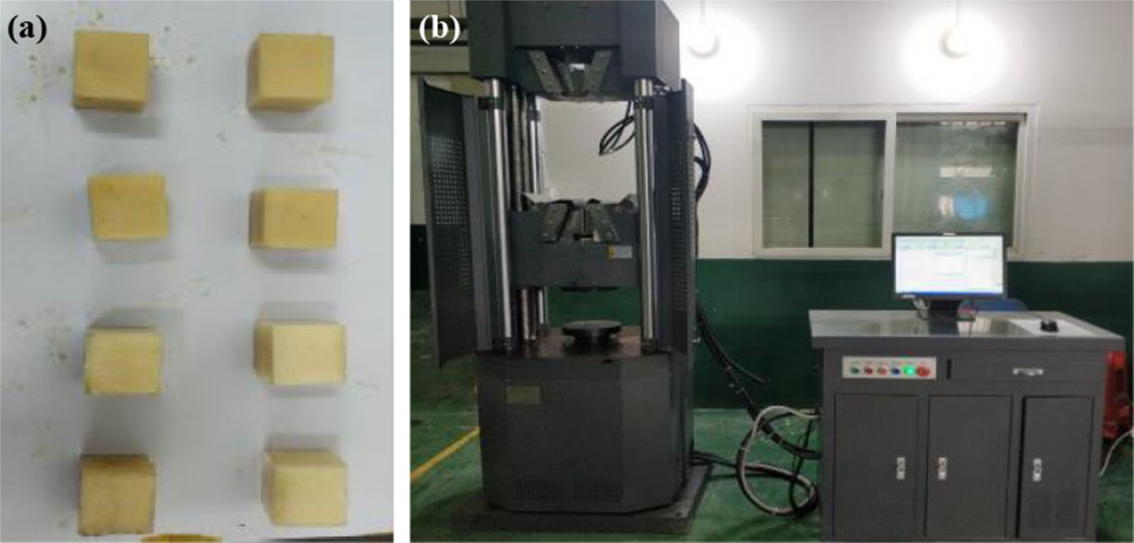
To develop a polyurethane formula suitable for the treatment of ballastless track mud pumping, we first performed indoor experiments to investigate the mechanical properties and gelation time of polyurethane elastomers synthesized with different raw material composition ratios, to determine an optimal composition ratio of the raw materials. Then, we conducted a dynamic field test to verify the remediation effect of the polyurethane material fabricated according to the design ratio.
The results showed that polyurethane grouting material with the selected design ratios improved the contact characteristics between the surface layer of the subgrade bed and the base plate in the area, coordinating the dynamic response between the track structure and the subgrade bed. Thus, the obtained polyurethane grouting material could be used to renovate mud pumping areas of ballastless tracks with a good treatment effect.
Unlocking home-based nocturnal health management: A fiber-optic approach for early detection of cardiorespiratory rhythm disorders
Hanyu Jin, Hao Li, Zhuolin Chen, Liangye Li, Zurui Wang, Kai Zhou, Weijian Hang, Zhipeng Chen, Junfeng Chen, Kai Shen, Jianfeng Wen, Chen Chen, Cunzheng Fan, Zhijun Yan, Feng Wang, Qizhen Sun
Opto-Electronic Advances
2026-07-10
A flexible wireless system for prospective photodynamic therapy applications
Rolan Mansour, Bhavani Yalagala, Vikas Vikas, Nikolas Bruce, Fawziye Tarhini, Georgios N. Arvanitakis, Mohammed Mughal, Jamie Blanche, Ahmad Taha, Jonathan Copper, Muhammad Imran, Karin Williams, Karin Oien, Mahmoud Wagih, Hadi Heidari, Robert Hadfield, David Flynn
Opto-Electronic Advances
2026-07-10
Parallel bright-field and multi-order edge imaging via wide field-of-view trichannel metalens
Xiaotong Li, Yeseul Kim, Youngsun Jeon, Junhwa Seong, Jaekyung Kim, Peng Tang, Shiqi Hu, Harit Keawmuang, Beomha Yang, Dongmin Jeon, Le Dai, Weiyan Li, Xiaodong Cai, Jinhui Shi, Yong-Sang Ryu, Trevon Badloe, Junsuk Rho
Opto-Electronic Advances
2026-07-10