(Peer-Reviewed) Target serum concentration of vancomycin may be reached earlier with a loading dose
Huang Yanxia 黄焰霞 ¹, He Le 何乐 ², Deng Yunxin ¹, Zhang Renjing ¹, Meng Mei 孟玫 ¹, Liu Jiao 刘娇 ¹, Chen Dechang 陈德昌 ¹
¹ Department of Critical Care Medicine, Ruijin Hospital Affiliated to Shanghai Jiao Tong University School of Medicine, Shanghai 201801, China
中国 上海 上海交通大学医学院附属瑞金医院 危重症医学科
² Department of Pharmacy, Ruijin Hospital Affiliated to Shanghai Jiao Tong University School of Medicine, Shanghai 201801, China
中国 上海 上海交通大学医学院附属瑞金医院 药剂科
Background
Vancomycin treatment failure against vancomycin-susceptible gram-positive cocci is not rare in the intensive care unit (ICU). One of the reasons for this is the substandard drug trough concentration. We aimed to examine the hypothesis that the target serum concentration could be reached earlier with a loading dose of vancomycin.
Methods
This retrospective cohort study was conducted at our ICU between June 2018 and June 2020 and involved patients who were suspected of having, or confirmed to have, gram-positive cocci infection and treated with vancomycin. One group of the patients was administered a loading dose of vancomycin (loading group) and compared with the group that did not receive a loading dose (control group). The baseline characteristics, vancomycin serum concentrations, and clinical outcomes were collected and analyzed.
Results
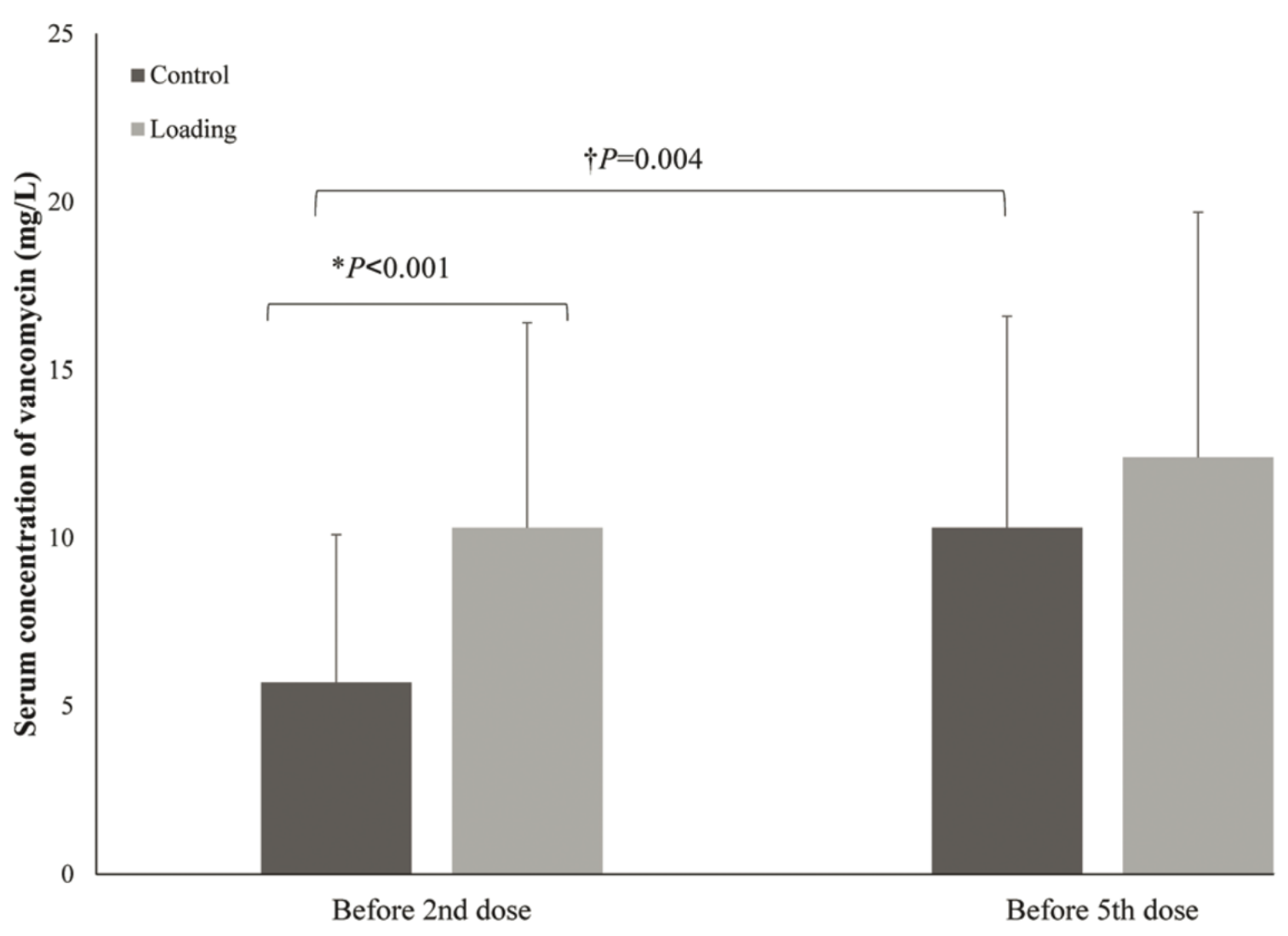
Fifty-five patients were finally included, of which 29 received a loading dose of vancomycin. The serum concentration of vancomycin before the second dose was significantly higher for the loading group than for the control group (10.3 ± 6.1 mg/L vs. 5.7 ± 4.4 mg/L, P = 0.002). The results for both groups were similar before the fifth dose (12.4 ± 7.3 mg/L vs. 10.3 ± 6.3 mg/L in the loading and the control groups, respectively; P = 0.251). The 28-day mortality was lower for the loading group than for the control group (6.7% vs. 34.6% in the loading and control groups, respectively; P = 0.026). No significant differences were observed in serum creatinine (Cr) concentrations of the two groups.
Conclusion
With the loading dose of vancomycin, the target serum concentration of vancomycin may be reached earlier without increasing the risk of acute kidney injury.
Unlocking home-based nocturnal health management: A fiber-optic approach for early detection of cardiorespiratory rhythm disorders
Hanyu Jin, Hao Li, Zhuolin Chen, Liangye Li, Zurui Wang, Kai Zhou, Weijian Hang, Zhipeng Chen, Junfeng Chen, Kai Shen, Jianfeng Wen, Chen Chen, Cunzheng Fan, Zhijun Yan, Feng Wang, Qizhen Sun
Opto-Electronic Advances
2026-07-10
A flexible wireless system for prospective photodynamic therapy applications
Rolan Mansour, Bhavani Yalagala, Vikas Vikas, Nikolas Bruce, Fawziye Tarhini, Georgios N. Arvanitakis, Mohammed Mughal, Jamie Blanche, Ahmad Taha, Jonathan Copper, Muhammad Imran, Karin Williams, Karin Oien, Mahmoud Wagih, Hadi Heidari, Robert Hadfield, David Flynn
Opto-Electronic Advances
2026-07-10
Parallel bright-field and multi-order edge imaging via wide field-of-view trichannel metalens
Xiaotong Li, Yeseul Kim, Youngsun Jeon, Junhwa Seong, Jaekyung Kim, Peng Tang, Shiqi Hu, Harit Keawmuang, Beomha Yang, Dongmin Jeon, Le Dai, Weiyan Li, Xiaodong Cai, Jinhui Shi, Yong-Sang Ryu, Trevon Badloe, Junsuk Rho
Opto-Electronic Advances
2026-07-10