(Peer-Reviewed) Long term performance of recycled concrete beams with different water–cement ratio and recycled aggregate replacement rate
Jingwei YING 应敬伟 ¹ ², Feiming SU 苏飞明 ¹, Shuangren CHEN 陈双仁 ¹
¹ School of Civil Engineering and Architecture, Guangxi University, Nanning 530004, China
中国 南宁 广西大学土木建筑工程学院
² Key Laboratory of Engineering Disaster Prevention and Structural Safety of China Ministry of Education, Guangxi Key Laboratory of Disaster Prevention and Engineering Safety, School of Civil Engineering and Architecture, Guangxi University, Nanning, 530004, China
中国 南宁 广西大学土木建筑工程学院 工程防灾与结构安全教育部重点实验室 广西防灾减灾与工程安全重点实验室
Abstract
The purpose of this study is to reveal the service performance of recycled aggregate concrete (RAC) components for different values of water−cement ratio and replacement rate of recycled coarse aggregate (RCA).
Generally, the concrete strength decreases with the increase of the replacement rate of RCA, in order to meet the strength requirements when changing the replacement rate of RCA, it is necessary to change the water−cement ratio at the same time. Therefore, the axial compressive strengths of prism with 25 mix proportions, the short-term mechanical properties and long-term deformation properties of reinforced concrete beams were tested respectively by changing water−cement ratio and RCA replacement rate.
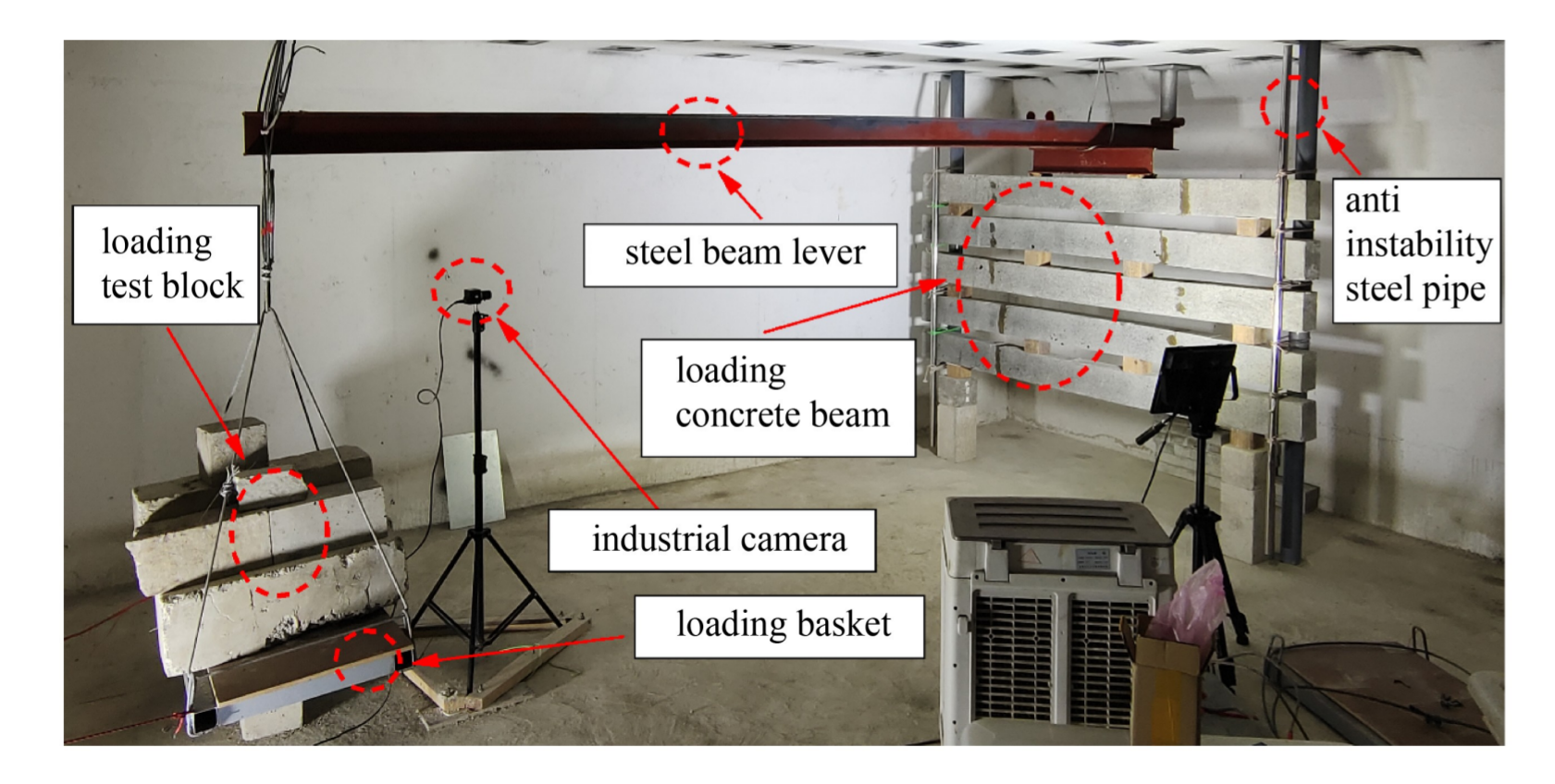
The bearing capacity and the strain nephogram of samples under different loads were obtained using the Digital Image Correlation (DIC) method, and a self-made gravity loading experimental device was used for long-term deformation investigation. Results showed that the damage pattern of RAC was the same as that of natural aggregate concrete (NAC), but the brittleness was more pronounced. The brittleness of concrete before failure can be reduced more effectively by adjusting the replacement rate of RCA than by adjusting the water−cement ratio.
The water−cement ratio has an evident influence on the axial compressive strength and early creep of concrete, while the replacement rate of RCA has a remarkable effect on the long-term deformation of the concrete beams.
Ultrafast all-optical modulation of wide-bandwidth pulses enabled by silicon-metasurfaces
Kaloyan Georgiev, Khosro Zangeneh Kamali, Anton A. Trifonov, Giulia Crotti, Lyuben Petrov, Stefan Georgiev, Hristo Iliev, Lei Xu, Unai Arregui Leon, Mohsen Rahmani, Giuseppe Della Valle, Ivan Buchvarov, Dragomir Neshev
Opto-Electronic Advances
2026-09-15
Physics-informed neural fields enable blind aberration correction for partially coherent quantitative phase imaging
Shun Zhou, Xingyu Huang, Linpeng Lu, Habib Ullah, Kaiyu Du, Maciej Trusiak, Malgorzata Kujawinska, Yuzhen Zhang, Yao Fan, Qian Chen, Qinrong Zhang, Chao Zuo
Opto-Electronic Science
2026-08-26
Heterogeneously integrated micro-ring with SnS₂ for dual-functional optical modulation and photodetection
Jinyi Du, Lidan Lu, Xu Zhang, Bofei Zhu, Wenbo Bo, Yingjie Xu, Guang Chen, Yanlin He, Guanghui Ren, Xiaoping Lou, Zheng You, Lianqing Zhu
Opto-Electronic Advances
2026-08-25
Hardware-aware lightweight photonic spiking neural network for pattern classification
Shuiying Xiang, Yahui Zhang, Shangxuan Shi, Haowen Zhao, Dianzhuang Zheng, Xingxing Guo, Yanan Han, Ye Tian, Liyue Zhang, Yuechun Shi, Yue Hao
Opto-Electronic Advances
2026-08-25
PhyspeNet: An empirical physics-aware network for adaptive speckle reconstructive spectrometry
Junrui Liang, Min Jiang, Jun Li, Zhongming Huang, Junhong He, Yanting Guo, Yanzhao Ke, Jun Ye, Jiangming Xu, Jinyong Leng, Pu Zhou
Opto-Electronic Advances
2026-08-25
A 36 × 240 Gbps hybrid mode/wavelength division multiplexing transmitter using lithium niobate on insulator
Mingyu Zhu, Weihan Wang, Ruitao Ma, Aoyun Gao, Chun Gao, Zexu Wang, Fei Huang, Zhenyuan Bao, Dajian Liu, Jiaxuan Gan, Zejie Yu, Huan Li, Weike Zhao, Daoxin Dai
Opto-Electronic Advances
2026-08-25