(Peer-Reviewed) Feature and Tendency of Technology Transfer in Z-Park Patent Cooperation Network: From the Perspective of Global Optimal Path
Jun Guan 关峻, Jingying Xu, Yu Han, Dawei Wang, Lizhi Xing 邢李志
School of Economics and Management, Beijing University of Technology, Beijing 100124, China
中国 北京 北京工业大学经济与管理学院
Purpose
This study aims to provide a new framework for analyzing the path of technology diffusion in the innovation network at the regional level and industrial level respectively, which is conducive to the integration of innovation resources, the coordinated development of innovative subjects, and the improvement of innovation abilities.
Design/ Methodology/ Approach
Based on the Z-Park patent cooperation data, we establish Inter-Enterprise Technology Transfer Network model and apply the concept of Pivotability to describe the key links of technology diffusion and quantify the importance of innovative partnerships. By measuring the topologically structural characteristics in the levels of branch park and the technosphere, this paper demonstrates how technology spreads and promotes overall innovation activities within the innovation network.
Findings
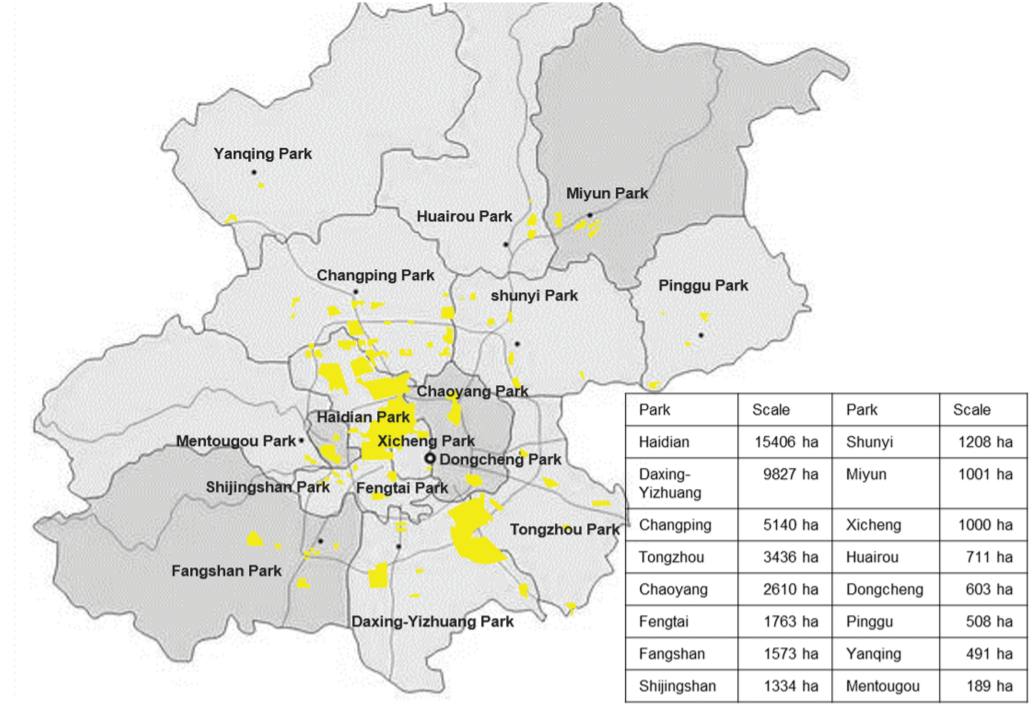
The results indicate that: (1) Patent cooperation network of the Z-Park displays heterogeneity and the connections between the innovative subjects distribute extremely uneven. (2) Haidian park owns the highest pivotability in the IETTN model, yet the related inter-enterprise patent cooperation is mainly concentrated in its internal, failing to facilitate the technology diffusion across multiple branch parks. (3) Such fields as “electronics and information” and “advanced manufacturing” are prominent in the cross-technosphere cooperation, while fields such as “new energy” and “environmental protection technology” can better promote industrial integration.
Electrically switchable bright-field and interference-synthesized edge-enhanced imaging with a polarization-multiplexed metalens
Xiaotong Li, Junhwa Seong, Yeseul Kim, Kwang-Suk Oh, Shiqi Hu, Le Dai, Harit Keawmuang, Beomha Yang, Minseok Choi, Youngsun Jeon, Cherry Park, Weiyan Li, Tianxu Jia, Han Zhu, Xiaodong Cai, Qi Zheng, Jinhui Shi, Young-Ki Kim, Yuchuan Shao, Trevon Badloe, Junsuk Rho
Opto-Electronic Science
2026-09-20
3D-printed copper water cooling system assisted fabrication of 10.6-μm high-power CO₂ laser resistance reflectors
Hongfei Jiao, Binbin Jiang, Xinshang Niu, Yifan Wang, Dongdong Li, Jun Yu, Xiaochuan Ji, Jingjing Xia, Jinlong Zhang, Xinbin Cheng, Zhanshan Wang
Opto-Electronic Advances
2026-09-15
Ultrafast all-optical modulation of wide-bandwidth pulses enabled by silicon-metasurfaces
Kaloyan Georgiev, Khosro Zangeneh Kamali, Anton A. Trifonov, Giulia Crotti, Lyuben Petrov, Stefan Georgiev, Hristo Iliev, Lei Xu, Unai Arregui Leon, Mohsen Rahmani, Giuseppe Della Valle, Ivan Buchvarov, Dragomir Neshev
Opto-Electronic Advances
2026-09-15
Physics-informed neural fields enable blind aberration correction for partially coherent quantitative phase imaging
Shun Zhou, Xingyu Huang, Linpeng Lu, Habib Ullah, Kaiyu Du, Maciej Trusiak, Malgorzata Kujawinska, Yuzhen Zhang, Yao Fan, Qian Chen, Qinrong Zhang, Chao Zuo
Opto-Electronic Science
2026-08-26