(Peer-Reviewed) DRVI: Dual Refinement for Video Interpolation
Xuanyi Wu ¹, Zhenkun Zhou 周振坤 ², Anup Basu ¹
¹ Department of Computing Science, University of Alberta, Edmonton, AB T6G 2R3, Canada
² Huawei Fields Laboratory, Hangzhou, Zhejiang 310000, China
IEEE Access, 2021-08-13
Abstract
The quality of a video clip is considered to be poor if the resolution or the frame rate is low. Video interpolation is thus introduced to enhance video quality and provide a better viewing experience to users. However, there are still some challenges, like the blur caused by motion changes.
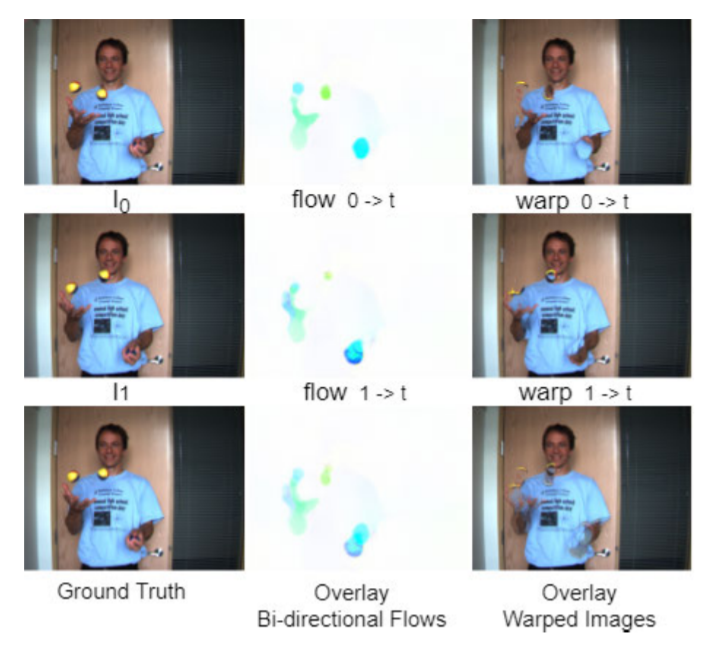
In this paper, we introduce a dual refinement technique for video interpolation (DRVI). It has three main steps, namely flow refinement, frame synthesis, and Haar refinement. The flow refinement can generate accurate bi-directional flows, which are more suitable for frame interpolation tasks. The Haar refinement uses the Discrete Wavelet Transform (DWT). It can preserve information in different frequency domains and also speed up the learning process. We also add an arbitrary time approximation module to allow multi-frame generation.
The number of learnable parameters in our model is much less than existing methods; still, it has excellent performance. Our method is trained on Vimeo90K (Xue et al. , 2019) and tested on three well-known datasets to demonstrate its effectiveness.
A 36 × 240 Gbps hybrid mode/wavelength division multiplexing transmitter using lithium niobate on insulator
Mingyu Zhu, Weihan Wang, Ruitao Ma, Aoyun Gao, Chun Gao, Zexu Wang, Fei Huang, Zhenyuan Bao, Dajian Liu, Jiaxuan Gan, Zejie Yu, Huan Li, Weike Zhao, Daoxin Dai
Opto-Electronic Advances
2026-08-25
Light-perception-based interactive control of an underwater digital twin hand
Jinlong Lu, Chao Zhang, Hengchang Nong, Dongying Wang, Hongyu Zhou, Junjie Weng, Yuehua Deng, Yang Yu, Qiang Bian, Jianfa Zhang, Chaofan Zhang, Zhenrong Zhang, Junbo Yang
Opto-Electronic Advances
2026-07-10
Unlocking home-based nocturnal health management: A fiber-optic approach for early detection of cardiorespiratory rhythm disorders
Hanyu Jin, Hao Li, Zhuolin Chen, Liangye Li, Zurui Wang, Kai Zhou, Weijian Hang, Zhipeng Chen, Junfeng Chen, Kai Shen, Jianfeng Wen, Chen Chen, Cunzheng Fan, Zhijun Yan, Feng Wang, Qizhen Sun
Opto-Electronic Advances
2026-07-10
A flexible wireless system for prospective photodynamic therapy applications
Rolan Mansour, Bhavani Yalagala, Vikas Vikas, Nikolas Bruce, Fawziye Tarhini, Georgios N. Arvanitakis, Mohammed Mughal, Jamie Blanche, Ahmad Taha, Jonathan Copper, Muhammad Imran, Karin Williams, Karin Oien, Mahmoud Wagih, Hadi Heidari, Robert Hadfield, David Flynn
Opto-Electronic Advances
2026-07-10
Parallel bright-field and multi-order edge imaging via wide field-of-view trichannel metalens
Xiaotong Li, Yeseul Kim, Youngsun Jeon, Junhwa Seong, Jaekyung Kim, Peng Tang, Shiqi Hu, Harit Keawmuang, Beomha Yang, Dongmin Jeon, Le Dai, Weiyan Li, Xiaodong Cai, Jinhui Shi, Yong-Sang Ryu, Trevon Badloe, Junsuk Rho
Opto-Electronic Advances
2026-07-10