(Peer-Reviewed) Interfacial Engineering Strategy for High-Performance Zn Metal Anodes
Bin Li ¹, Xiaotan Zhang ², Tingting Wang ¹, Zhangxing He 何章兴 ¹, Bingan Lu 鲁兵安 ³, Shuquan Liang 梁叔全 ², Jiang Zhou 周江 ²
¹ School of Chemical Engineering, North China University of Science and Technology, Tangshan, 063009, People’s Republic of China
中国 唐山 华北理工大学化工学院
² School of Materials Science and Engineering, Key Laboratory of Electronic Packaging and Advanced Functional Materials of Hunan Province, Central South University, Changsha, 410083, People’s Republic of China
中国 长沙 中南大学 材料科学与工程学院 电子封装及先进功能材料湖南省重点实验室
³ School of Physics and Electronics, Hunan University, Changsha, 410082, People’s Republic of China
中国 长沙 湖南大学物理与微电子科学学院
Abstract
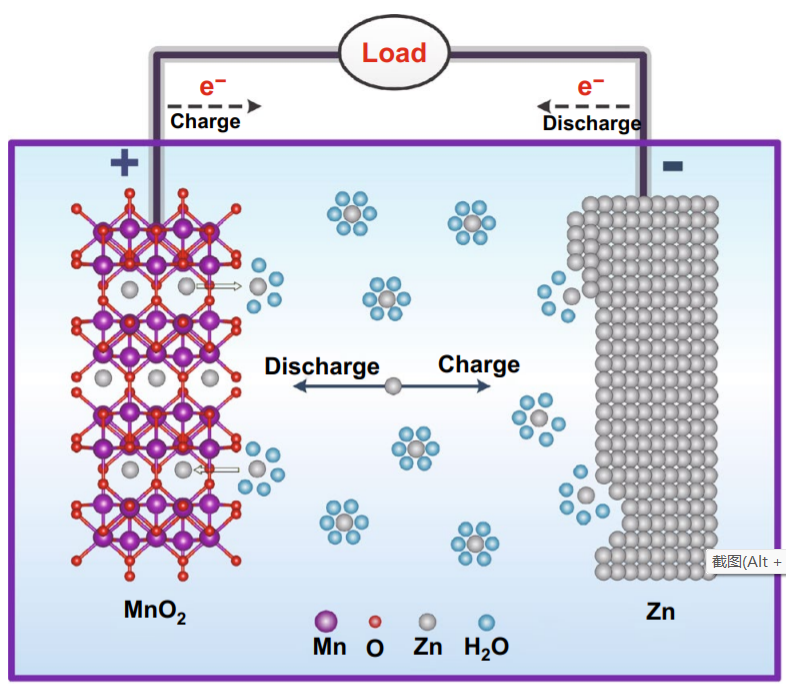
Due to their high safety and low cost, rechargeable aqueous Zn-ion batteries (RAZIBs) have been receiving increased attention and are expected to be the next generation of energy storage systems. However, metal Zn anodes exhibit a limited-service life and inferior reversibility owing to the issues of Zn dendrites and side reactions, which severely hinder the further development of RAZIBs.
Researchers have attempted to design high-performance Zn anodes by interfacial engineering, including surface modification and the addition of electrolyte additives, to stabilize Zn anodes. The purpose is to achieve uniform Zn nucleation and flat Zn deposition by regulating the deposition behavior of Zn ions, which effectively improves the cycling stability of the Zn anode.
This review comprehensively summarizes the reaction mechanisms of interfacial modification for inhibiting the growth of Zn dendrites and the occurrence of side reactions. In addition, the research progress of interfacial engineering strategies for RAZIBs is summarized and classified. Finally, prospects and suggestions are provided for the design of highly reversible Zn anodes.
Ultrafast all-optical modulation of wide-bandwidth pulses enabled by silicon-metasurfaces
Kaloyan Georgiev, Khosro Zangeneh Kamali, Anton A. Trifonov, Giulia Crotti, Lyuben Petrov, Stefan Georgiev, Hristo Iliev, Lei Xu, Unai Arregui Leon, Mohsen Rahmani, Giuseppe Della Valle, Ivan Buchvarov, Dragomir Neshev
Opto-Electronic Advances
2026-09-15
Physics-informed neural fields enable blind aberration correction for partially coherent quantitative phase imaging
Shun Zhou, Xingyu Huang, Linpeng Lu, Habib Ullah, Kaiyu Du, Maciej Trusiak, Malgorzata Kujawinska, Yuzhen Zhang, Yao Fan, Qian Chen, Qinrong Zhang, Chao Zuo
Opto-Electronic Science
2026-08-26
Heterogeneously integrated micro-ring with SnS₂ for dual-functional optical modulation and photodetection
Jinyi Du, Lidan Lu, Xu Zhang, Bofei Zhu, Wenbo Bo, Yingjie Xu, Guang Chen, Yanlin He, Guanghui Ren, Xiaoping Lou, Zheng You, Lianqing Zhu
Opto-Electronic Advances
2026-08-25
Hardware-aware lightweight photonic spiking neural network for pattern classification
Shuiying Xiang, Yahui Zhang, Shangxuan Shi, Haowen Zhao, Dianzhuang Zheng, Xingxing Guo, Yanan Han, Ye Tian, Liyue Zhang, Yuechun Shi, Yue Hao
Opto-Electronic Advances
2026-08-25
PhyspeNet: An empirical physics-aware network for adaptive speckle reconstructive spectrometry
Junrui Liang, Min Jiang, Jun Li, Zhongming Huang, Junhong He, Yanting Guo, Yanzhao Ke, Jun Ye, Jiangming Xu, Jinyong Leng, Pu Zhou
Opto-Electronic Advances
2026-08-25
A 36 × 240 Gbps hybrid mode/wavelength division multiplexing transmitter using lithium niobate on insulator
Mingyu Zhu, Weihan Wang, Ruitao Ma, Aoyun Gao, Chun Gao, Zexu Wang, Fei Huang, Zhenyuan Bao, Dajian Liu, Jiaxuan Gan, Zejie Yu, Huan Li, Weike Zhao, Daoxin Dai
Opto-Electronic Advances
2026-08-25