(Peer-Reviewed) Polyurethane grouting materials with different compositions for the treatment of mud pumping in ballastless track subgrade beds: properties and application effect
Zhichao Huang 黄志超 ¹ ², Qian Su 苏谦 ¹ ², Junjie Huang 黄俊杰 ¹ ², Minqi Dong 董敏琪 ¹, Dong Li ³, Ting Liu ⁴
¹ School of Civil Engineering, Southwest Jiaotong University, Chengdu, 610031, China
中国 成都 西南交通大学土木工程学院
² Key Laboratory of High-Speed Railway Engineering of Ministry of Education, Southwest Jiaotong University, Chengdu, 610031, China
中国 成都 西南交通大学 高速铁路线路工程教育部重点实验室
³ China Railway Fourth Survey and Design Institute Group Co., Ltd., Wuhan, 430000, China
中国 武汉 中铁第四勘察设计院集团有限公司
⁴ China Railway Construction Kunlun Investment Group Co., Ltd., Chengdu, 610040, China
中国 成都 中国铁建昆仑投资集团有限公司
Abstract
Mud pumping in subgrade beds under ballastless tracks will deteriorate the dynamic performance of infrastructure under railway lines, reduce the smoothness of the railway lines, and seriously affect the comfort and safety of the trains. Due to their good mechanical properties, two-component polyurethane materials can be used for grouting to treat the fouling problems caused by ballastless track mud pumping.
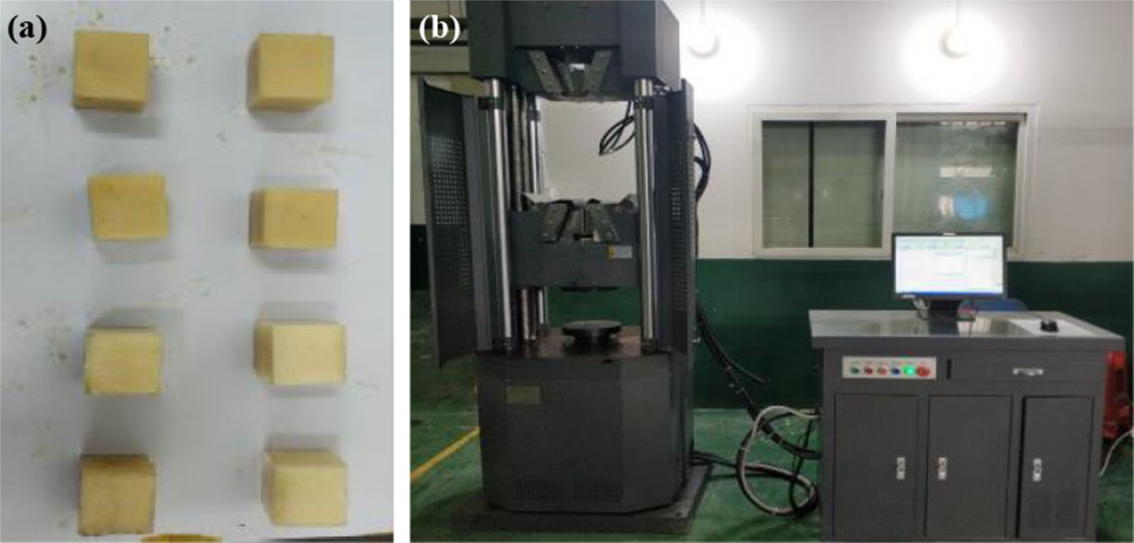
To develop a polyurethane formula suitable for the treatment of ballastless track mud pumping, we first performed indoor experiments to investigate the mechanical properties and gelation time of polyurethane elastomers synthesized with different raw material composition ratios, to determine an optimal composition ratio of the raw materials. Then, we conducted a dynamic field test to verify the remediation effect of the polyurethane material fabricated according to the design ratio.
The results showed that polyurethane grouting material with the selected design ratios improved the contact characteristics between the surface layer of the subgrade bed and the base plate in the area, coordinating the dynamic response between the track structure and the subgrade bed. Thus, the obtained polyurethane grouting material could be used to renovate mud pumping areas of ballastless tracks with a good treatment effect.
Ultrafast all-optical modulation of wide-bandwidth pulses enabled by silicon-metasurfaces
Kaloyan Georgiev, Khosro Zangeneh Kamali, Anton A. Trifonov, Giulia Crotti, Lyuben Petrov, Stefan Georgiev, Hristo Iliev, Lei Xu, Unai Arregui Leon, Mohsen Rahmani, Giuseppe Della Valle, Ivan Buchvarov, Dragomir Neshev
Opto-Electronic Advances
2026-09-15
Physics-informed neural fields enable blind aberration correction for partially coherent quantitative phase imaging
Shun Zhou, Xingyu Huang, Linpeng Lu, Habib Ullah, Kaiyu Du, Maciej Trusiak, Malgorzata Kujawinska, Yuzhen Zhang, Yao Fan, Qian Chen, Qinrong Zhang, Chao Zuo
Opto-Electronic Science
2026-08-26
Heterogeneously integrated micro-ring with SnS₂ for dual-functional optical modulation and photodetection
Jinyi Du, Lidan Lu, Xu Zhang, Bofei Zhu, Wenbo Bo, Yingjie Xu, Guang Chen, Yanlin He, Guanghui Ren, Xiaoping Lou, Zheng You, Lianqing Zhu
Opto-Electronic Advances
2026-08-25
Hardware-aware lightweight photonic spiking neural network for pattern classification
Shuiying Xiang, Yahui Zhang, Shangxuan Shi, Haowen Zhao, Dianzhuang Zheng, Xingxing Guo, Yanan Han, Ye Tian, Liyue Zhang, Yuechun Shi, Yue Hao
Opto-Electronic Advances
2026-08-25
PhyspeNet: An empirical physics-aware network for adaptive speckle reconstructive spectrometry
Junrui Liang, Min Jiang, Jun Li, Zhongming Huang, Junhong He, Yanting Guo, Yanzhao Ke, Jun Ye, Jiangming Xu, Jinyong Leng, Pu Zhou
Opto-Electronic Advances
2026-08-25
A 36 × 240 Gbps hybrid mode/wavelength division multiplexing transmitter using lithium niobate on insulator
Mingyu Zhu, Weihan Wang, Ruitao Ma, Aoyun Gao, Chun Gao, Zexu Wang, Fei Huang, Zhenyuan Bao, Dajian Liu, Jiaxuan Gan, Zejie Yu, Huan Li, Weike Zhao, Daoxin Dai
Opto-Electronic Advances
2026-08-25