(Peer-Reviewed) Natural history and cycle threshold values analysis of COVID-19 in Xiamen City, China
Bin Deng ¹, 邓彬 Weikang Liu 刘炜康 ¹, Zhinan Guo 郭志南 ², Li Luo 罗丽 ¹, Tianlong Yang 杨天龙 ¹, Jiefeng Huang 黄杰锋 ¹, Buasiyamu Abudunaibi ¹, Yidun Zhang ², Xue Ouyang 欧阳雪 ², Demeng Wang ², Chenghao Su 苏成豪 ³, Tianmu Chen 陈田木 ¹
¹ State Key Laboratory of Molecular Vaccinology and Molecular Diagnostics, School of Public Health, Xiamen University, Xiamen City, Fujian Province, People's Republic of China
中国 厦门 厦门大学公共卫生学院 分子疫苗学和分子诊断学国家重点实验室
² Xiamen Center for Disease Control and Prevention, Xiamen City, Fujian Province, People's Republic of China
中国 厦门 厦门市疾病预防控制中心
³ Zhongshan Hospital, Fudan University (Xiamen Branch), Xiamen City, Fujian Province, People's Republic of China
中国 厦门 复旦大学附属中山医院厦门医院
Abstract
Objective
This study elaborated the natural history parameters of Delta variant, explored the differences in detection cycle thresholds (Ct) among cases.
Methods
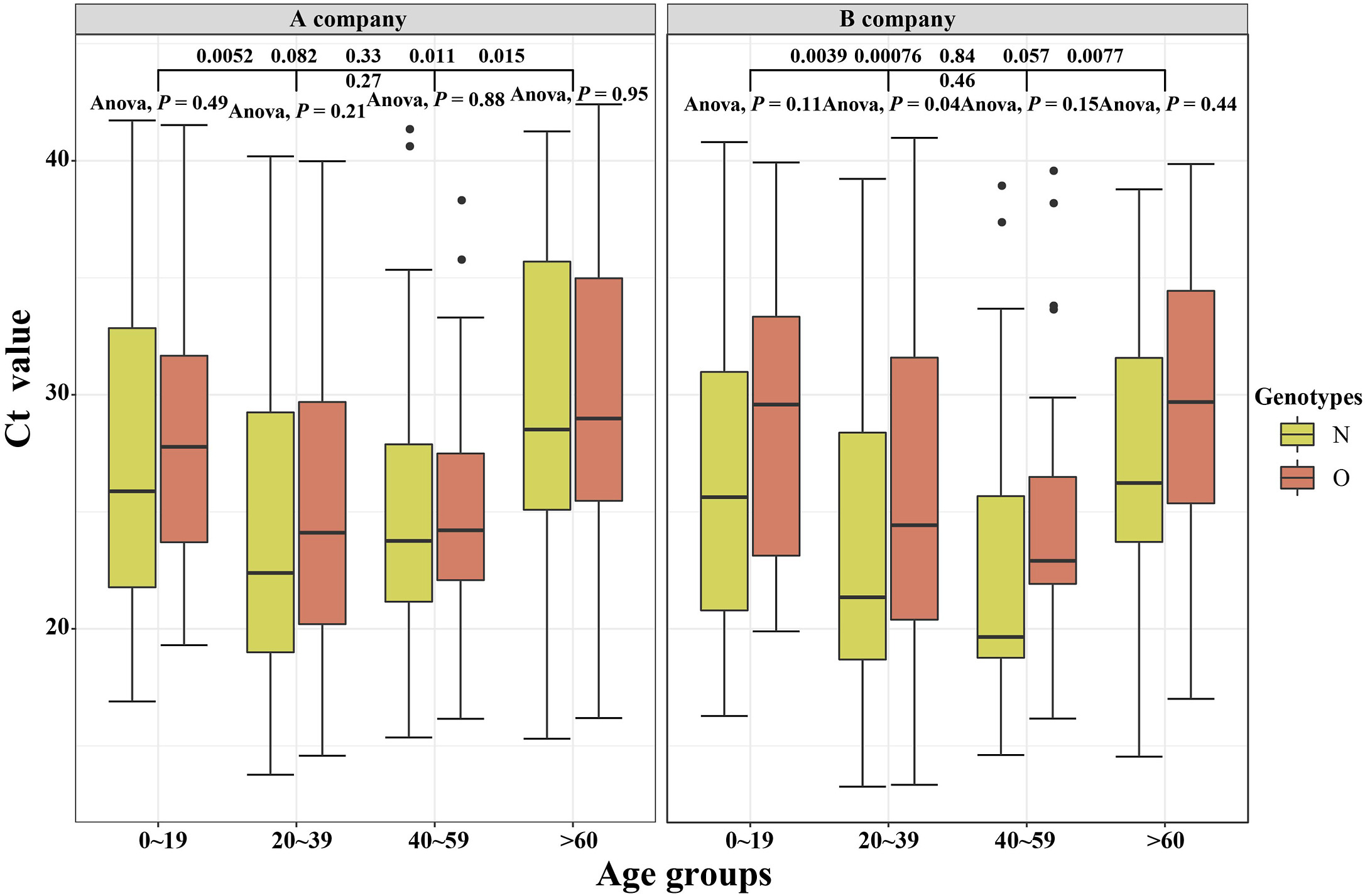
Natural history parameters were calculated based on the different onset time and exposure time of the cases. Intergenerational relationships between generations of cases were calculated. Differences in Ct values of cases by gender, age, and mode of detection were analyzed statistically to assess the detoxification capacity of cases.
Results
The median incubation period was 4 days; the detection time for cases decreased from 25 to 7 h as the outbreak continued. The average generation time (GT), time interval between transmission generations (TG) and serial interval (SI) were 3.6 ± 2.6 days, 1.67 ± 2.11 days and 1.7 ± 3.0 days. Among the Ct values, we found little differences in testing across companies, but there were some differences in the gender of detected genes. The Ct values continuous to decreased with age, but increased when the age was greater than 60.
Conclusion
This epidemic was started from aggregation of factories. It is more reasonable to use SI to calculate the effective reproduction number and the time-varying reproduction number. And the analysis of Ct values can improve the positive detection rate and improve prevention and control measures.
Ultrafast all-optical modulation of wide-bandwidth pulses enabled by silicon-metasurfaces
Kaloyan Georgiev, Khosro Zangeneh Kamali, Anton A. Trifonov, Giulia Crotti, Lyuben Petrov, Stefan Georgiev, Hristo Iliev, Lei Xu, Unai Arregui Leon, Mohsen Rahmani, Giuseppe Della Valle, Ivan Buchvarov, Dragomir Neshev
Opto-Electronic Advances
2026-09-15
Physics-informed neural fields enable blind aberration correction for partially coherent quantitative phase imaging
Shun Zhou, Xingyu Huang, Linpeng Lu, Habib Ullah, Kaiyu Du, Maciej Trusiak, Malgorzata Kujawinska, Yuzhen Zhang, Yao Fan, Qian Chen, Qinrong Zhang, Chao Zuo
Opto-Electronic Science
2026-08-26
Heterogeneously integrated micro-ring with SnS₂ for dual-functional optical modulation and photodetection
Jinyi Du, Lidan Lu, Xu Zhang, Bofei Zhu, Wenbo Bo, Yingjie Xu, Guang Chen, Yanlin He, Guanghui Ren, Xiaoping Lou, Zheng You, Lianqing Zhu
Opto-Electronic Advances
2026-08-25
Hardware-aware lightweight photonic spiking neural network for pattern classification
Shuiying Xiang, Yahui Zhang, Shangxuan Shi, Haowen Zhao, Dianzhuang Zheng, Xingxing Guo, Yanan Han, Ye Tian, Liyue Zhang, Yuechun Shi, Yue Hao
Opto-Electronic Advances
2026-08-25
PhyspeNet: An empirical physics-aware network for adaptive speckle reconstructive spectrometry
Junrui Liang, Min Jiang, Jun Li, Zhongming Huang, Junhong He, Yanting Guo, Yanzhao Ke, Jun Ye, Jiangming Xu, Jinyong Leng, Pu Zhou
Opto-Electronic Advances
2026-08-25
A 36 × 240 Gbps hybrid mode/wavelength division multiplexing transmitter using lithium niobate on insulator
Mingyu Zhu, Weihan Wang, Ruitao Ma, Aoyun Gao, Chun Gao, Zexu Wang, Fei Huang, Zhenyuan Bao, Dajian Liu, Jiaxuan Gan, Zejie Yu, Huan Li, Weike Zhao, Daoxin Dai
Opto-Electronic Advances
2026-08-25